
Heavenly Signs
The Equinox
When the Heavens Reveal God's Order
An invitation not only to read, but to look for yourself.
Imagine
It is early in the morning. The world is still quiet. The sky begins slowly to lighten, but the sun is not yet visible.
You stand outside, looking to the east, and wait.
Then the first edge of the sun appears above the horizon.
An ordinary sunrise, you might think.
But twice a year something remarkable happens. The sun rises almost exactly in the east and sets almost exactly in the west.
That moment we call the equinox.
And perhaps this simple phenomenon tells us more about the order of God's creation than we have ever realized.
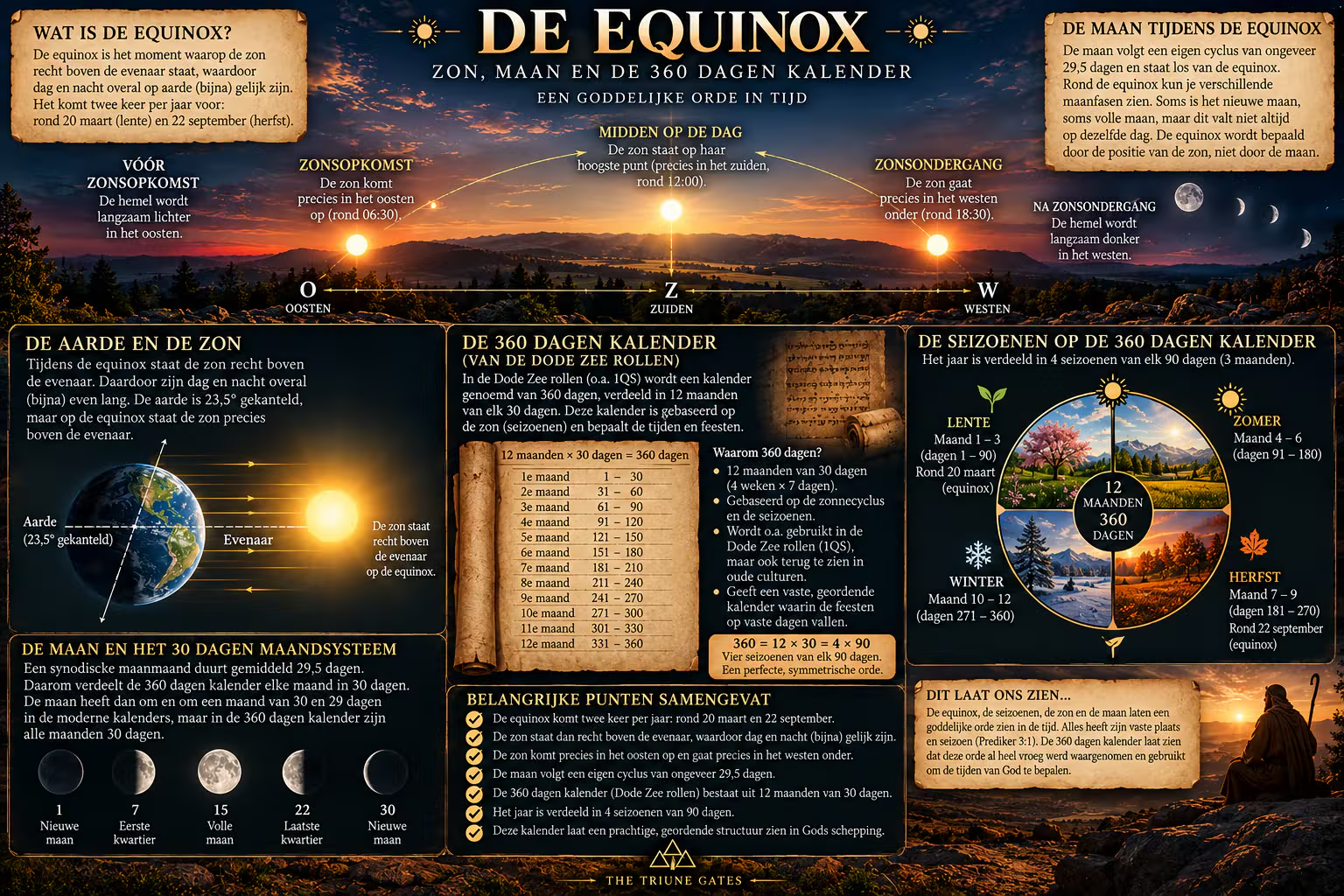
What is the equinox?
Our earth revolves around the sun while its axis is tilted. That is why the seasons change and the length of our days varies.
But twice a year neither hemisphere is tilted toward the sun. The sun stands directly above the equator, and everywhere on earth day and night are about equally long.
The word equinox comes from Latin and means "equal night."
These moments fall around:
- March 20 — the spring equinox, the beginning of astronomical spring in the northern hemisphere.
- September 22 or 23 — the autumn equinox, the beginning of astronomical autumn.
They are two recognizable points in the earth's yearly movement.
 Enlarge Image
The heavenly lights as signs
In Genesis 1:14 we read that God created the heavenly lights to separate day from night, and to serve as signs for appointed times, days and years.
That is a remarkable thought.
Long before people made calendars, built clocks or performed complex calculations, the sun, moon and stars were already there.
The heavens themselves showed the passing of time.
The sun rises, the sun sets. The moon goes through its phases. The seasons return.
And all of it according to an order not devised by men.
Perhaps we have grown so accustomed to our calendars and digital clocks that we have forgotten to look at the original signs.
The ancient calendar of Enoch
In the ancient Book of Enoch, especially in chapters 72–82, it is described in detail how the sun and moon follow their courses.
There we find a remarkable calendar system of 364 days.
The year consists of four periods of 91 days, together exactly 52 weeks.
That means the days of the week return on the same calendar dates every year.
We also encounter this ancient calendar tradition in the Book of Jubilees and in calendar writings from Qumran, where the Dead Sea Scrolls were found.
For the people who used this calendar, it was not only about counting days.
It was also about recognizing the appointed times of God.
In this tradition, the spring equinox was connected with the beginning of the yearly cycle. From there the seasons and the holy feasts received their place.
Think, for example, of the Feast of Weeks, Shavuot, which within this calendar tradition always returns on the same weekday.
Thus the calendar became not only a means of measuring time, but also a way of reflecting on God's created order.
Two heavenly markers
The equinox in March and the one in September form two recognizable markers in the year.
Between them, the days change.
After the spring equinox, the days in the northern hemisphere grow longer, until summer reaches its peak.
Afterward they grow shorter again.
At the autumn equinox, that remarkable balance between light and darkness arises once more.
And then the longer nights return.
A continuing cycle.
Year after year.
Generation after generation.
The people who looked to the horizon thousands of years ago saw the same yearly movement that we can still observe today.
Look to the east yourself
You do not need to be an astronomer to experience the equinox.
Try it for yourself.
Around March 20 or September 22, choose a clear morning. Find a safe place with an open view of the eastern horizon.
Go outside before the sun rises.
Look to the east and wait quietly until the first sunlight appears.
Note where the sun rises. Around the equinox it is almost exactly in the east.
Come back on other days and look again. You will discover that the place of sunrise slowly shifts along the horizon.
You can observe the same at sunset, toward the west.
It asks only some patience, attention and wonder. And if you want to know precisely where the east lies, you can determine that beforehand with a compass or a landmark.
Never look directly into the bright sun. You only need to observe the place of sunrise.
A door to wonder
In the ancient writings of Enoch there is talk of gates through which the sun rises and sets.
A remarkable image.
As if the heavens have fixed passageways through which the heavenly lights follow their appointed way.
You can see the equinox symbolically as such a marker: a recognizable moment when the yearly cycle reaches a new point.
Not because a door literally opens in the sky, but because creation invites us to pause before something far greater than ourselves.
The heavens declare the glory of God, and the firmament shows the work of His hands.
— Psalm 19
Perhaps that is the most beautiful thought behind the equinox.
Not that we must unravel every secret of the heavens.
Not that we must understand all the numbers and calendars.
But that we learn to look again.
Finally
Look Up
We live in a world where almost everything is calculated for us.
Our phones tell us the time, when the sun rises and when a new season begins.
But creation itself is still there.
The sun follows its yearly course across our sky. The seasons return. The heavenly lights keep giving their signs.
And every spring and every autumn we are given the opportunity to see it for ourselves.
Perhaps it is worth pausing on an early morning.
Without haste.
Without a screen.
Just you, the horizon and the first light.
For sometimes wonder does not begin with finding an answer.
Sometimes it simply begins with looking up.
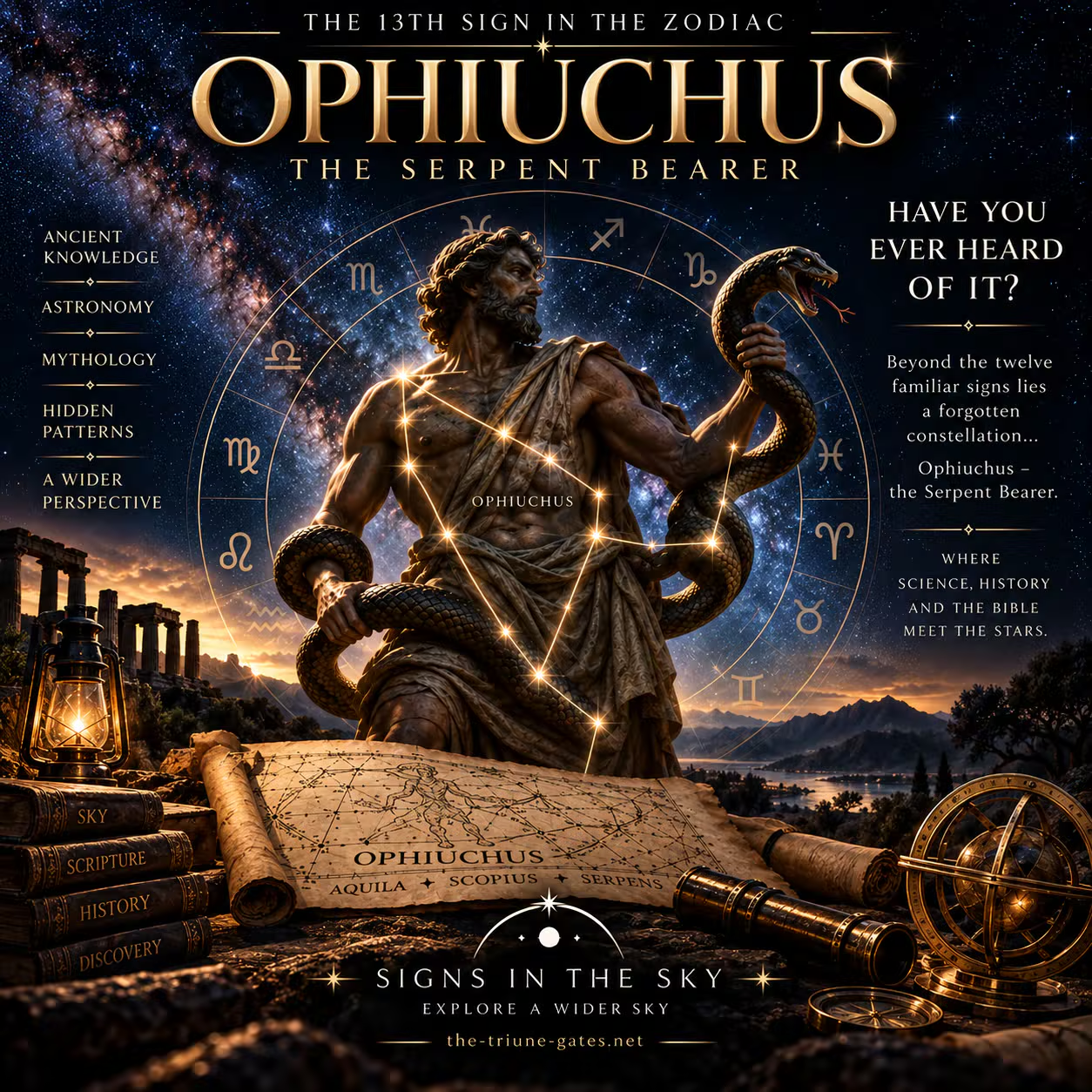
The Thirteenth Sign — The Serpent Bearer
Most people know the twelve signs of the zodiac. But there is another remarkable constellation in the sky: Ophiuchus — the Serpent Bearer.
Ophiuchus is depicted as a man holding an enormous snake. And the remarkable thing is: the sun actually moves through this constellation every year. Yet Ophiuchus was not given a place among the traditional twelve signs of the zodiac.
But there is another curious image in the sky.
Seen from Earth, the Milky Way forms a massive luminous band that runs all the way around the sky. In ancient cultures, such a cosmic ring was sometimes associated with the image of a serpent or dragon. This brings to mind the Ouroboros — the ancient depiction of a snake eating its own tail: a closed circle with no visible beginning or end.
And right amidst those ancient heavenly images we find…
the Serpent Bearer.
Coincidence? Ancient symbolism? A forgotten way of looking at the sky?
Perhaps we do not need to provide an answer right away.
Sometimes a discovery simply begins with looking up… and asking a question.
Have you ever heard of the thirteenth sign?
Signs in the Sky — The Triune Gates
Investigate Case 004A Sign in the Sky
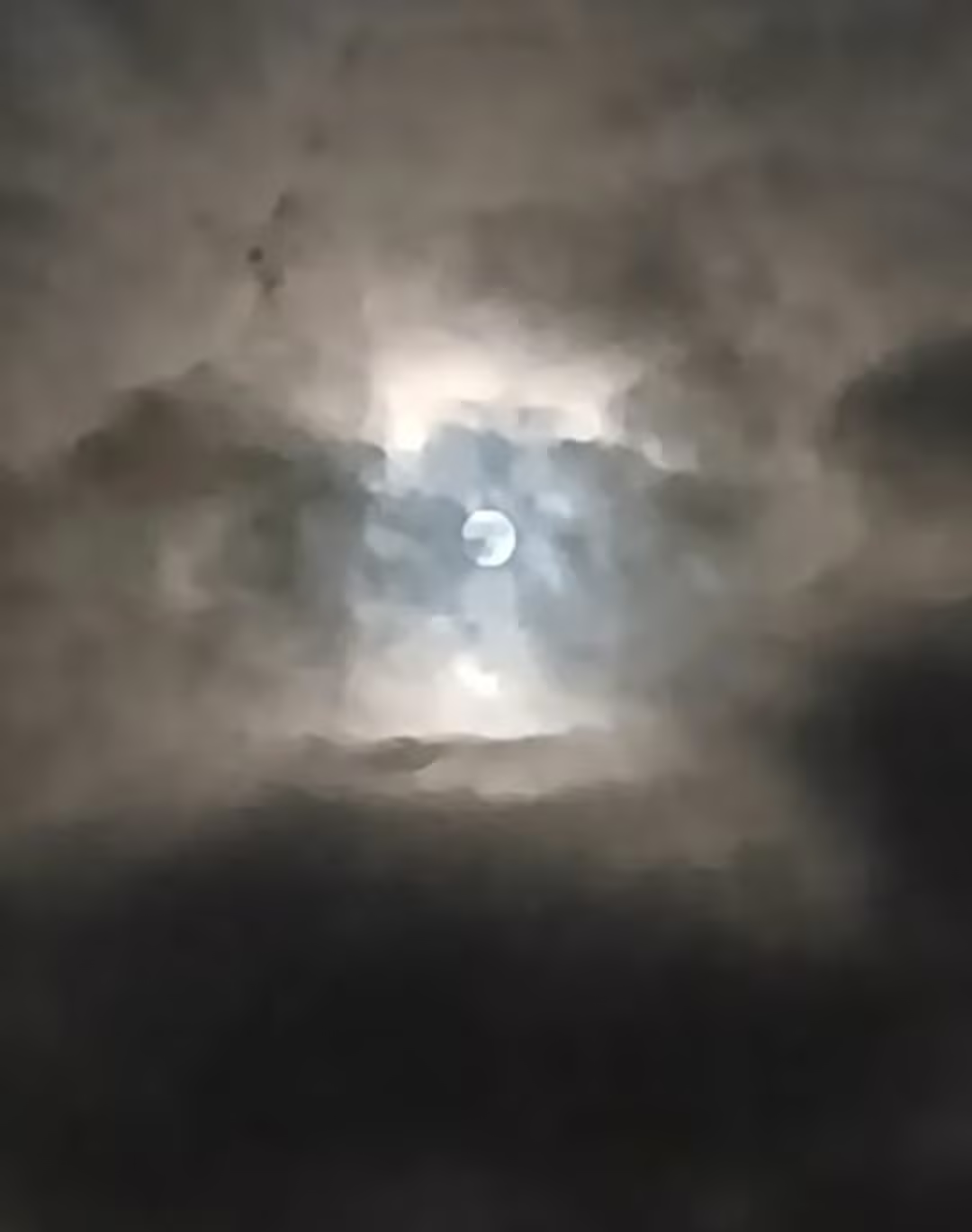
"I took this picture of the full moon on April 1, 2026. Never seen something like this before... a sign in the sky."