
Journey VI
After the Flood
A New World — But Not Yet a Restored World
The waters recede. The Ark comes to rest. Noah steps onto a cleansed earth.
For a moment, it almost looks like a second Creation. But the Flood has not removed the problem of sin. And remarkably, some of the mysteries from the world before the Flood seem to appear again.
What Is Written?
The biblical foundation of the post-flood world.
1. The Waters Recede
Genesis 8 begins with hope:
“And God remembered Noah.”
The waters decrease and the Ark comes to rest upon the mountains of Ararat. Noah sends out a raven and later a dove. Eventually the dove returns with an olive leaf.
The world is becoming habitable again.
“And God remembered Noah.”
The waters decrease and the Ark comes to rest upon the mountains of Ararat. Noah sends out a raven and later a dove. Eventually the dove returns with an olive leaf.
The world is becoming habitable again.
2. Noah Builds an Altar
Noah's first recorded act after leaving the Ark is not building a house.
He builds an altar.
He offers sacrifices to God. The new world begins with worship.
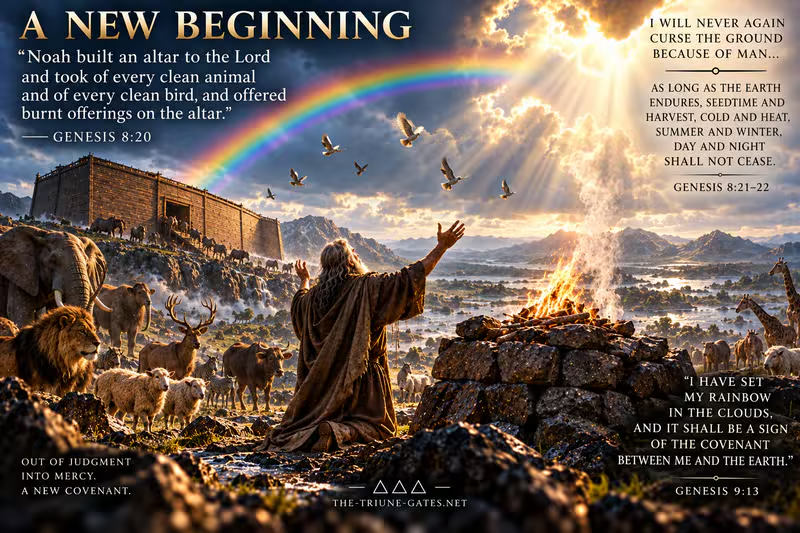
He builds an altar.
He offers sacrifices to God. The new world begins with worship.
3. God's Covenant with Noah
God establishes a covenant with Noah, his descendants and the living creatures of the earth.
Never again will a flood destroy all flesh in this manner. The sign of that covenant is placed in the heavens: the rainbow.
— Genesis 9
Never again will a flood destroy all flesh in this manner. The sign of that covenant is placed in the heavens: the rainbow.
— Genesis 9
4. A Second Beginning
God tells Noah and his sons:
“Be fruitful, and multiply, and replenish the earth.”
The language strongly echoes Genesis 1. Adam received a world. Now Noah receives a world.
Humanity has been given another beginning. But something is different.
The human heart has not been recreated. Genesis 8:21 still speaks of the inclination of man's heart toward evil. The earth has been washed—but humanity still needs redemption.
“Be fruitful, and multiply, and replenish the earth.”
The language strongly echoes Genesis 1. Adam received a world. Now Noah receives a world.
Humanity has been given another beginning. But something is different.
The human heart has not been recreated. Genesis 8:21 still speaks of the inclination of man's heart toward evil. The earth has been washed—but humanity still needs redemption.
5. Noah's Vineyard
Then comes an uncomfortable story.
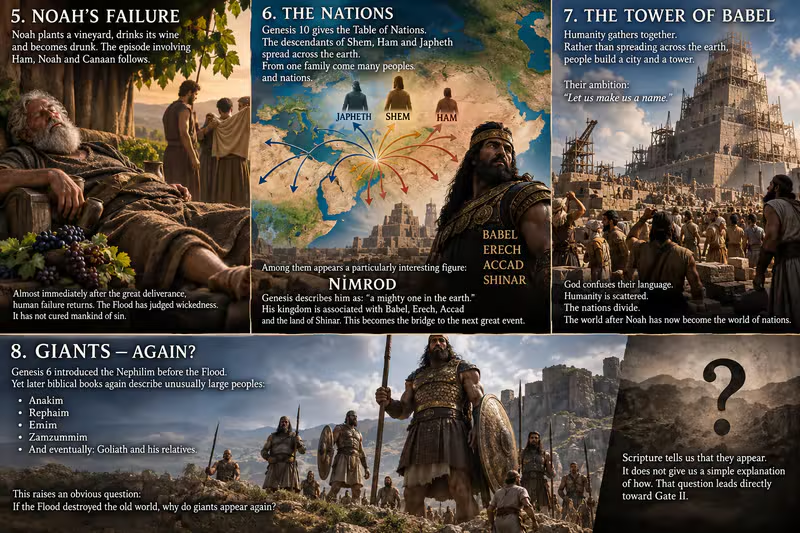
Noah plants a vineyard, drinks its wine and becomes drunk. The episode involving Ham, Noah and Canaan follows.
Almost immediately after the great deliverance, human failure returns. The Flood has judged wickedness. It has not cured mankind of sin.
Noah plants a vineyard, drinks its wine and becomes drunk. The episode involving Ham, Noah and Canaan follows.
Almost immediately after the great deliverance, human failure returns. The Flood has judged wickedness. It has not cured mankind of sin.
6. The Nations
Genesis 10 gives the Table of Nations. The descendants of Shem, Ham and Japheth spread across the earth. From one family come many peoples and nations.
Among them appears a particularly interesting figure:
NIMROD
Genesis describes him as: “a mighty one in the earth.”
His kingdom is associated with Babel, Erech, Accad and the land of Shinar. This becomes the bridge to the next great event.
Among them appears a particularly interesting figure:
NIMROD
Genesis describes him as: “a mighty one in the earth.”
His kingdom is associated with Babel, Erech, Accad and the land of Shinar. This becomes the bridge to the next great event.
7. The Tower of Babel
Humanity gathers together. Rather than spreading across the earth, people build a city and a tower.
Their ambition:
“Let us make us a name.”
God confuses their language. Humanity is scattered. The nations divide. The world after Noah has now become the world of nations.
Their ambition:
“Let us make us a name.”
God confuses their language. Humanity is scattered. The nations divide. The world after Noah has now become the world of nations.
8. Giants — Again?
And here Scripture leaves us with one of the greatest post-Flood mysteries.
Genesis 6 introduced the Nephilim before the Flood. Yet later biblical books again describe unusually large peoples:
Anakim.
Rephaim.
Emim.
Zamzummim.
And eventually: Goliath and his relatives.
This raises an obvious question: If the Flood destroyed the old world, why do giants appear again?
Scripture tells us that they appear. It does not give us a simple explanation of how. That question leads directly toward Gate II.
Genesis 6 introduced the Nephilim before the Flood. Yet later biblical books again describe unusually large peoples:
Anakim.
Rephaim.
Emim.
Zamzummim.
And eventually: Goliath and his relatives.
This raises an obvious question: If the Flood destroyed the old world, why do giants appear again?
Scripture tells us that they appear. It does not give us a simple explanation of how. That question leads directly toward Gate II.