
Case 005
The Last Oath
September 20, 2026
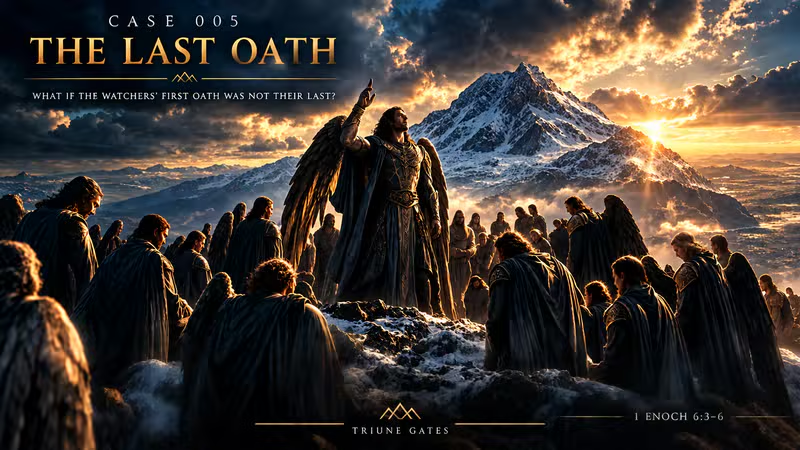
What if the Watchers' first oath was not their last?
There is a story hidden behind the story of the Flood.
A story about heavenly beings who crossed a boundary.
They descended.
They took women.
Their offspring became giants.
Forbidden knowledge spread across the earth.
And according to the ancient Book of Enoch, two hundred of these beings stood together upon a mountain and made an oath.
They became known as the Watchers.
Their first oath ended in catastrophe.
But what if it was not their last?
1. THE FIRST OATH
The Bible gives us only a glimpse.
Genesis 6:1–4 tells us that the "sons of God" saw the daughters of men, took wives for themselves, and that the Nephilim were upon the earth in those days.
Then Genesis describes an earth increasingly filled with wickedness and violence.
But an ancient Jewish text expands the mysterious scene.
1 Enoch 6:3–6
Semyaza, leader of the Watchers, fears that the others may abandon the plan and leave him alone to bear the punishment.
So they make an agreement.
Not merely a promise.
An oath.
All two hundred bind themselves together not to abandon their plan.
Then they descend upon Mount Hermon.
According to 1 Enoch, the mountain itself became associated with the oath they swore there.
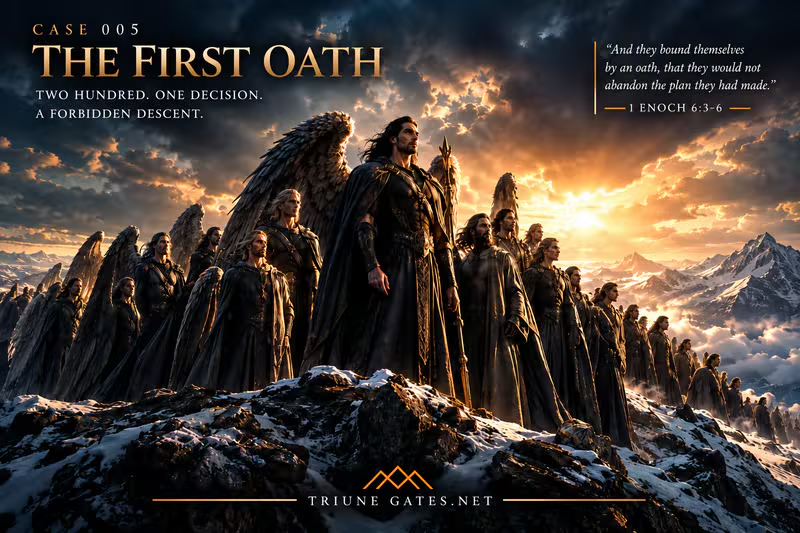
Two hundred Watchers.
One decision.
One oath.
No one would turn back.
And that oath would change the world.
2. WHAT THEY UNLEASHED
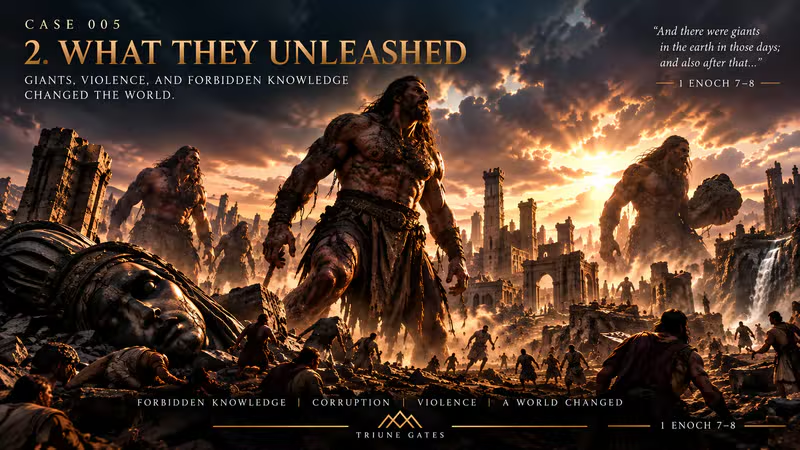
According to 1 Enoch 7–8, the rebellion did not stop with the taking of women.
The giants became violent.
Blood was shed.
Azazel taught mankind weapons and warfare.
Other Watchers revealed various forbidden arts and heavenly secrets.
The earth became corrupted.
Then heaven answered.
In 1 Enoch 10, God commands Raphael to bind Azazel.
Michael is commanded concerning Semyaza and the other Watchers.
After witnessing the destruction of their offspring, they are to be bound beneath the earth.
And then comes a remarkable expression.
1 Enoch 10:12
They are bound for seventy generations beneath the earth—
until the day of their judgment.
The ancient Book of Jubilees preserves a closely related tradition.
Jubilees 5:6, 10
The Watchers are bound in the depths of the earth.
Their offspring are destroyed.
And their fathers remain imprisoned:
until the great day of judgment.
The rebellion is over.
The Watchers have lost.
The chains close.
But their final judgment still lies ahead.
3. THE NEW TESTAMENT ECHO
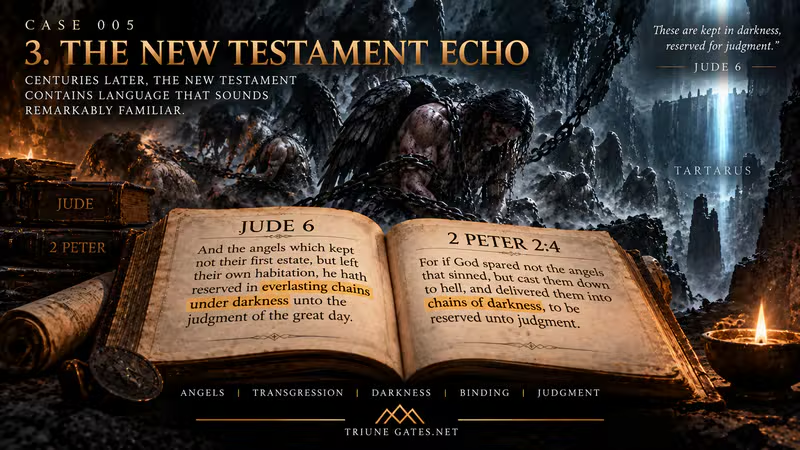
Centuries later, the New Testament contains language that sounds remarkably familiar.
Jude 6
Jude speaks about angels who did not remain within their proper position but abandoned their proper dwelling.
God has kept them in darkness, in everlasting bonds—
for the judgment of the Great Day.
2 Peter 2:4
Peter likewise speaks of angels who sinned being cast into Tartarus and kept in gloomy darkness—
until judgment.
Neither passage names Semyaza.
Neither explicitly says:
"These are the two hundred Watchers of 1 Enoch."
But the similarities are difficult to miss.
Angels.
Transgression.
Leaving their proper place.
Darkness.
Binding.
Waiting.
Judgment.
And once again we encounter the same mysterious idea:
They are not simply forgotten.
They are being kept.
4. THE DETAIL WE ALMOST FORGOT
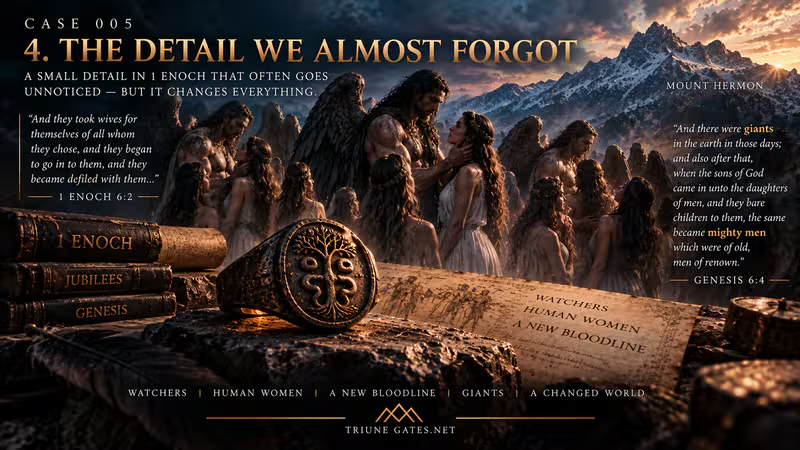
There is something in the Watcher story that changes the way we look at these beings.
Something easily overlooked.
Before their imprisonment, the Watchers become terrified.
Enoch confronts them with their judgment.
And then something extraordinary happens.
1 Enoch 13:3–6
They ask Enoch to write a petition for them.
Why?
Because they want forgiveness.
They are ashamed.
They can no longer lift their eyes toward heaven.
Enoch writes their petition and presents their request.
Later he finds them gathered together—
afraid,
weeping,
their faces covered.
Their petition does not cancel the judgment.
God does not simply declare that nothing happened.
The sentence remains.
But we have discovered something important.
The rebels asked for mercy.
Was this true repentance?
Was it merely terror because punishment had arrived?
The text does not allow us to look into every Watcher's heart.
But the question has now entered the story.
And those beings are about to have a very long time to think.
5. THOUSANDS OF YEARS IN DARKNESS
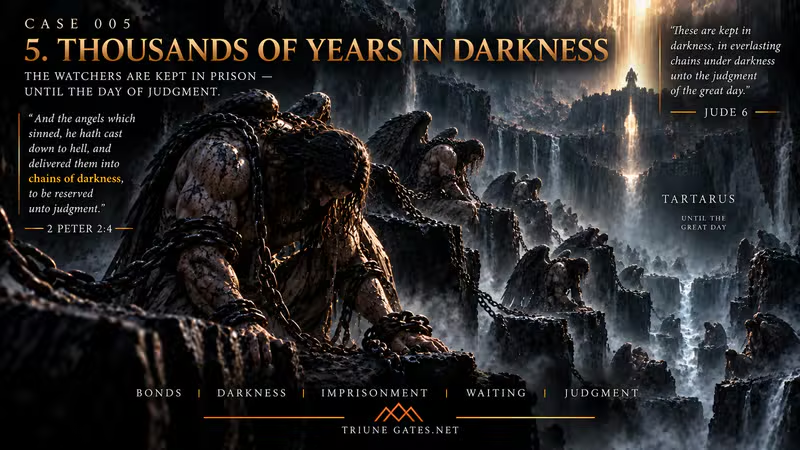
Imagine it.
Not ten years.
Not a human lifetime.
Not even a century.
Generation after generation passes above them.
Kingdoms rise.
Kingdoms fall.
Abraham.
Egypt.
Moses.
Israel.
Babylon.
Persia.
Greece.
Rome.
And still the Watchers wait.
Their children are gone.
The world they helped corrupt has been swept away by the Flood.
Their forbidden knowledge has nevertheless left its mark upon the ancient story.
And they know why they are there.
They crossed God's boundary.
But would every one of them still think exactly as he did upon Mount Hermon?
1 Enoch does not tell us.
So for now we leave that question unanswered.
Because another Enochic tradition gives us something remarkable to consider.
6. WATCHERS WHO MOURN
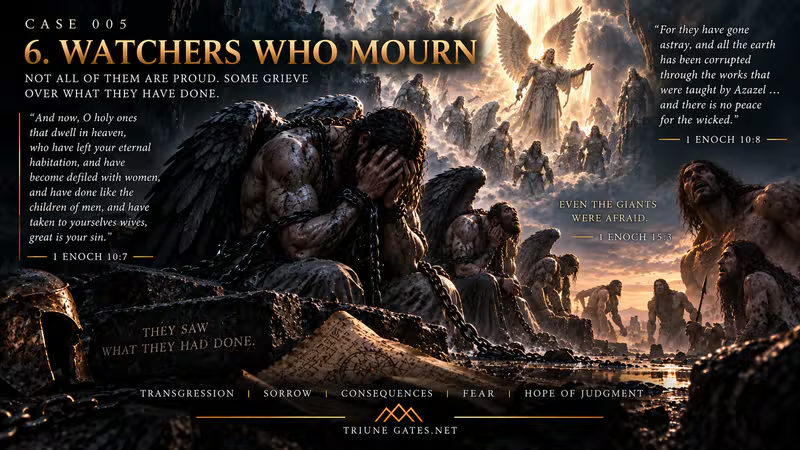
In 2 Enoch 18, Enoch encounters beings called the Grigori—the Watchers.
They are silent.
Their faces are sorrowful.
They mourn because of what happened to their brethren.
The text refers to the transgression associated with Hermon, women and giants.
Enoch then does something unexpected.
He tells these Grigori to resume their service before God.
And they listen.
They arrange themselves.
Trumpets sound.
And the Grigori begin to sing together before the Lord.
Scholars have noticed how unusual this scene is.
Researcher Andrei Orlov describes it in connection with the motif of repenting fallen angels and notes that the text leaves open the question of how God ultimately regards their repentance.
An important caution:
2 Enoch does not simply say that Semyaza and all two hundred imprisoned Watchers have been forgiven.
It distinguishes the Grigori Enoch encounters from their condemned brethren.
But the tradition nevertheless introduces an extraordinary possibility into the wider Watcher story:
beings connected with the fallen Watcher tradition can mourn what happened and return to serving God.
And that is not the only ancient hint.
7. THE GIANTS ALSO BECOME AFRAID
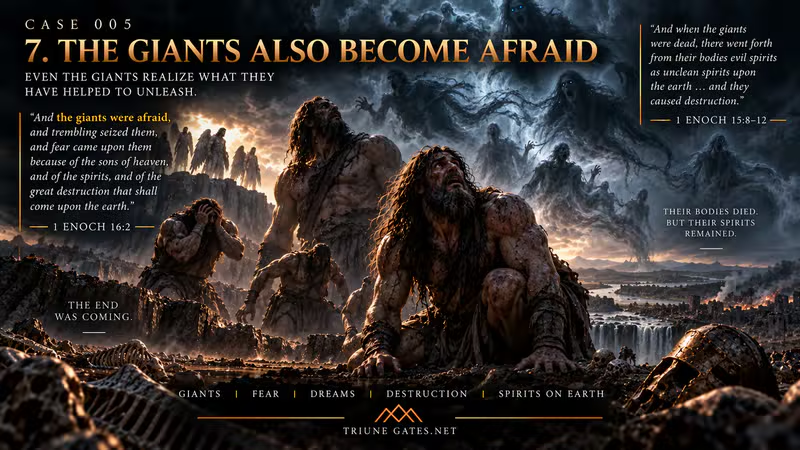
Fragments of the Book of Giants, discovered among the Dead Sea Scrolls at Qumran, tell the Watcher story from another angle.
Now we encounter their giant offspring.
Names appear.
Ohyah.
Hahyah.
Mahaway.
Dreams begin to trouble them.
Something terrible is coming.
They seek an interpretation.
Mahaway is sent to Enoch.
And Enoch sends back a message of judgment.
The surviving manuscripts are fragmentary, so we must be careful not to reconstruct more than the text actually preserves.
But one surviving portion of 4Q203, associated with Enoch's message, contains an extraordinary appeal connected with the coming destruction:
pray.
Scholarly discussion of the Book of Giants has consequently identified a motif of repentant giants seeking God's mercy.
Once again:
Repentance does not automatically mean escape from judgment.
But within the corrupted world created by the Watcher rebellion, not every response to God's coming judgment is simply defiance.
Some become afraid.
Some seek answers.
Some pray.
And that brings us back to the prison.
8. WERE THE TWO HUNDRED STILL ONE?
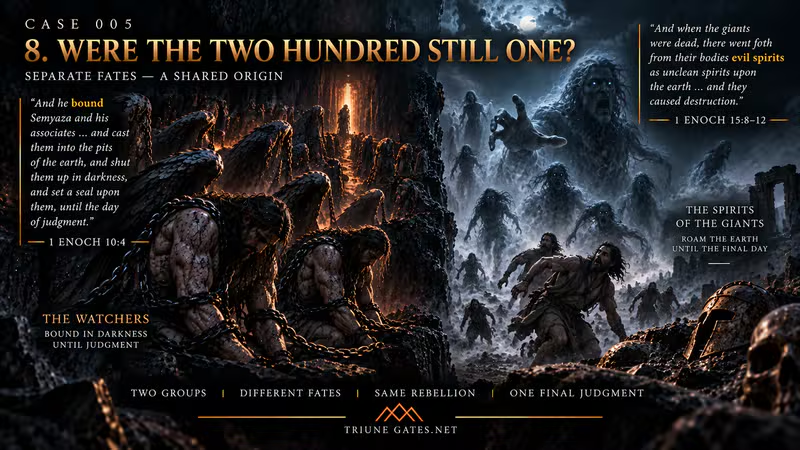
Here the evidence ends.
And the Case begins.
From this point forward we are deliberately asking:
WHAT IF?
At Mount Hermon the two hundred stood together.
Their unity was essential to their rebellion.
Semyaza feared being left alone.
So they bound themselves with an oath.
But now imagine those same beings after thousands of years.
Would they still be united?
Perhaps one still curses God.
Perhaps another blames Semyaza.
Perhaps another remains completely committed to the ancient rebellion.
Perhaps one says:
“We were right.”
But perhaps somewhere in the darkness another Watcher finally answers:
“No.”
“God was right.”
And suddenly the oath of Hermon has a crack in it.
What if the two hundred entered their prison as one group...
but will not leave it as one?
9. UNTIL THE GREAT DAY
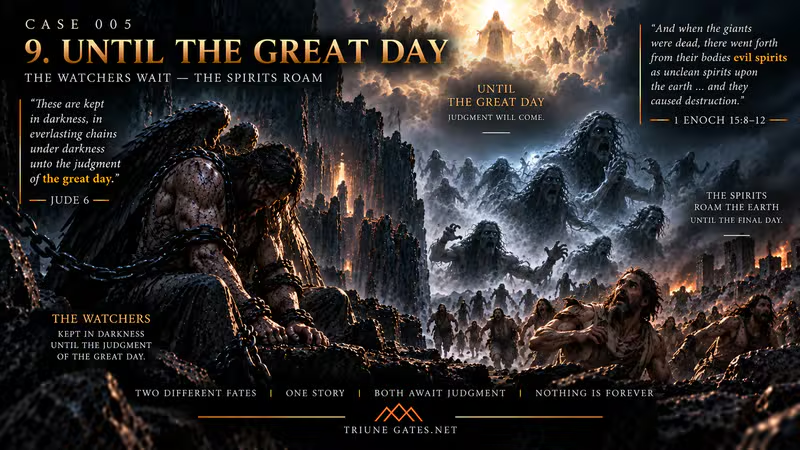
This brings us to one of the strangest expressions in the entire investigation.
The Watchers are repeatedly described as being held until judgment.
1 Enoch 10.
Jubilees 5.
Jude 6.
2 Peter 2:4.
The obvious interpretation is straightforward:
They remain imprisoned until God brings them forward for judgment.
That may be all it means.
But Revelation contains another scene that makes our Case considerably more interesting.
Revelation 9:14–15
John hears a command:
Release the four angels who are bound at the great river Euphrates.
And the four angels are released.
They had been prepared for a specific:
hour,
day,
month,
and year.
Think carefully about what happens here.
These supernatural beings were bound.
They were being held for a divinely appointed future moment.
And when that moment arrived—
the command came to release them.
They then perform a role within the unfolding judgment.
These four angels are not identified as Semyaza's Watchers.
We must not make that leap and call it Scripture.
But the principle itself is now undeniable:
Scripture contains a scene in which bound supernatural beings are preserved until an appointed end-time moment, released, and then become active within divine judgment.
And suddenly the word until becomes very interesting.
10. THE FINAL WAR IS NOT ONLY HUMAN
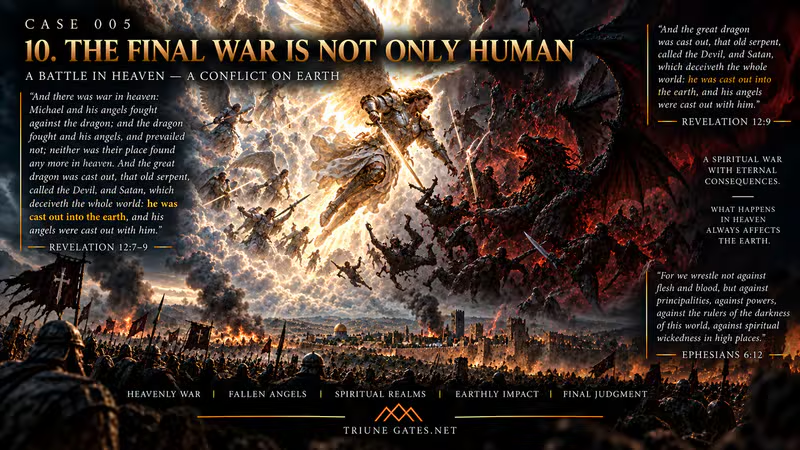
The Dead Sea Scrolls add another piece.
The War Scroll (1QM) describes an eschatological conflict between the Sons of Light and the Sons of Darkness.
But this is more than human warfare.
Belial stands behind the forces of darkness.
The scroll speaks of supernatural powers associated with him—“spirits of his lot” and “angels of destruction.”
Opposing them stands the Prince of Light and the forces belonging to God.
In the seventh phase of the conflict, the text describes God's great hand overcoming Belial and the angels of his dominion.
The final battle is therefore both earthly and cosmic.
The New Testament contains an equally dramatic heavenly conflict.
Revelation 12:7
Michael and his angels fight against the dragon.
And the dragon and his angels fight back.
Heaven itself becomes a battlefield.
So within both Second Temple Jewish expectation and Revelation, the idea of a final conflict involving supernatural armies is not strange at all.
And somewhere in the older Watcher tradition...
there remain supernatural prisoners waiting for the Great Day.
11. WHAT IF THE CHAINS OPEN?
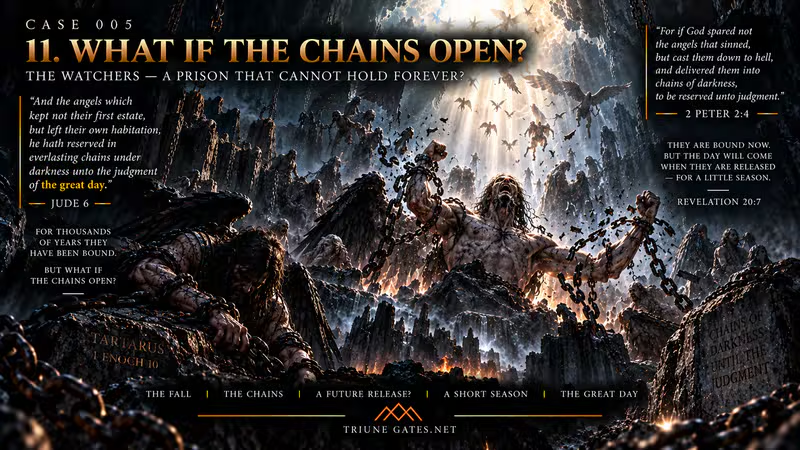
Now we step completely into speculation.
Not doctrine.
Not a prediction.
Not something the Bible says will happen.
This is the question behind the Case.
What if the Great Day arrives...
...and the chains open?
Imagine the first moment.
After thousands of years beneath the earth, the Watchers see the world again.
But it is not the world they remember.
Humanity has multiplied.
Kingdoms cover the earth.
Knowledge has increased beyond anything the ancient world could have imagined.
Weapons can destroy entire cities.
Human beings fly through the heavens.
Machines communicate across the planet instantly.
And the ancient cosmic rebellion has reached its final confrontation.
Then perhaps a familiar voice speaks.
Semyaza.
The same leader who once stood upon Hermon.
The same one who feared that his companions might abandon him.
And perhaps he says again:
“Brothers.”
“Remember our oath.”
Some step forward.
But this time...
not everyone moves.
12. THE OATH BREAKS
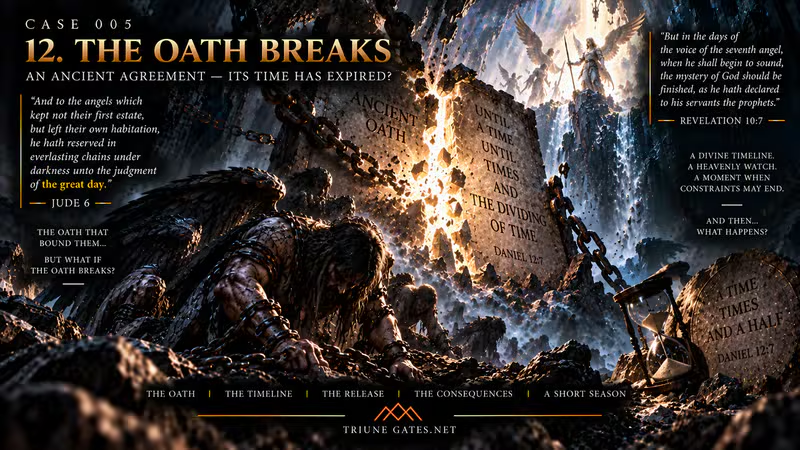
Silence.
For thousands of years their first oath held them together.
Then one Watcher answers:
“That oath brought us here.”
Another steps away from Semyaza.
Then another.
And another.
The impossible happens.
For the first time since Mount Hermon—
the two hundred divide.
One group remains committed to the rebellion.
Perhaps they see the dragon and recognize the same ancient defiance:
God will not rule us.
But the others have had thousands of years to understand what those words cost.
They remember their children.
They remember the violence.
They remember the Flood.
They remember their chains.
And they remember the petition they once asked Enoch to carry before God.
So when the final rebellion calls them...
they refuse.
13. THE SECOND CHOICE
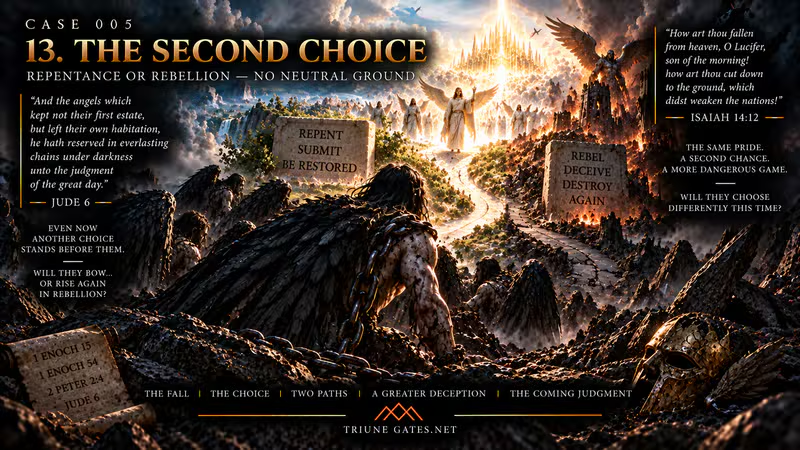
Nobody promises them heaven.
Nobody says their ancient crimes have disappeared.
Nobody tells them:
“Fight for God and your judgment is cancelled.”
The ancient texts give us no authority to promise them that.
They know the Great Day is still coming.
They know why they were imprisoned.
They know that when the battle ends, they themselves may still have to stand before the Judge.
But this time their decision is different.
At Hermon they said:
“We will do this together, even though God has forbidden it.”
Now perhaps one Watcher says:
“Even if I must face His judgment afterward...”
“this time I will obey.”
And then he turns away from the ancient rebellion.
Another follows.
Then another.
Their first oath united them against God's order.
Their final choice tears that oath apart.
14. WATCHER AGAINST WATCHER
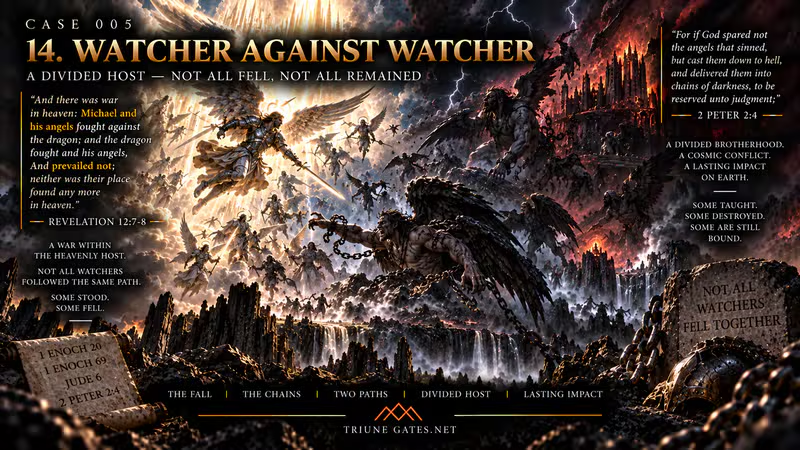
Imagine the battlefield.
Michael and the heavenly host.
The powers of darkness.
Human kingdoms caught within the final conflict.
And then something neither side expected.
The ancient prisoners enter the battle.
But together.. or not together.
Watcher against Watcher?
Brother against brother?
The rebellion of Genesis 6 meets its final reckoning.
Those who once descended together now face one another across the battlefield.
Some still choose rebellion.
Others choose obedience.
And the enemy who once celebrated the fall of the Watchers discovers something devastating:
their first rebellion did not guarantee their final loyalty.
Perhaps God does not need to erase their past to use their final act.
Perhaps He does not need to call their rebellion righteous.
He remains Judge.
They remain accountable.
But He is also Sovereign.
Their first rebellion occurred when they abandoned the place He had given them.
Their final movement occurs only when He permits the chains to open.
The reversal would be complete.
15. THE LAST OATH
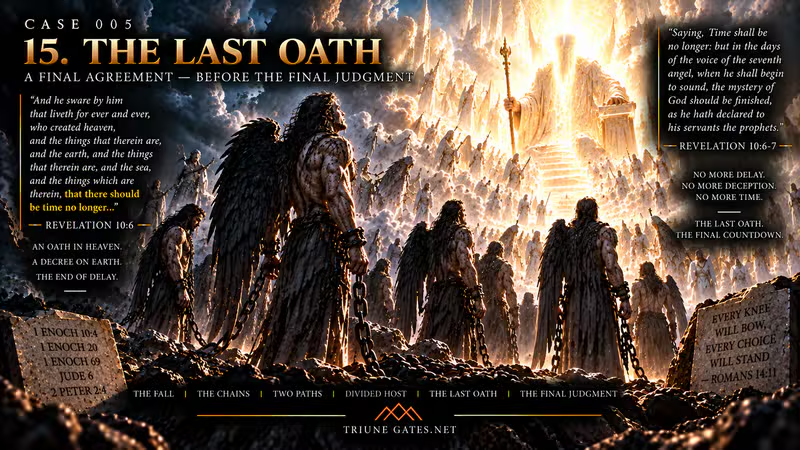
Their first oath was made upon a mountain.
Two hundred voices.
One rebellion.
Their last oath might be very different.
Perhaps there is no mountain.
No ceremony.
No two hundred voices.
Perhaps there is only one ancient being standing between two armies.
He knows what he did.
He knows what his rebellion caused.
He knows that obedience now cannot undo the past.
He does not know whether mercy waits beyond the battle.
But this time he does not look toward his brothers before deciding.
He looks toward God.
And says:
“Once I chose rebellion because my brothers chose rebellion.”
“This time I choose obedience...”
“even if I stand alone.”
That would be the true reversal of Hermon.
Not merely changing armies.
Breaking the oath that started everything.
16. AFTER THE LAST BATTLE
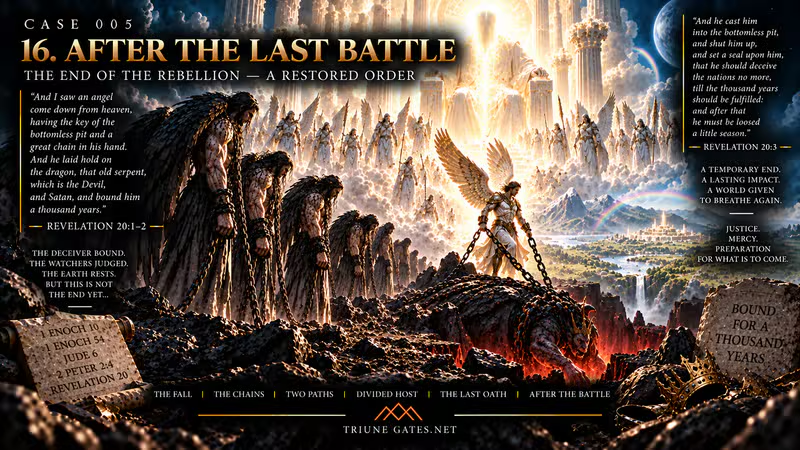
Then the war ends.
The rebellion is crushed.
The battlefield becomes silent.
But the story of the Watchers is not finished.
Because the ancient texts never said they were being kept merely for a battle.
They said they were being kept for:
judgment.
So imagine the repentant Watchers after the victory.
They do not fly triumphantly into heaven.
They do not celebrate their freedom.
They lay down their weapons.
Michael and the holy angels stand before them.
And perhaps, for the first time since before Hermon, these ancient beings look toward heaven without rebellion in their hearts.
Then comes the moment they always knew would come.
The throne.
The books.
The Judge.
The Great Day.
Their final obedience cannot erase their first rebellion.
Their service cannot purchase mercy.
Their repentance cannot force God to forgive them.
And Scripture never promises us that fallen Watchers will receive another chance.
So neither will this Case.
We stop here.
Before the throne.
17. ONLY THE JUDGE KNOWS
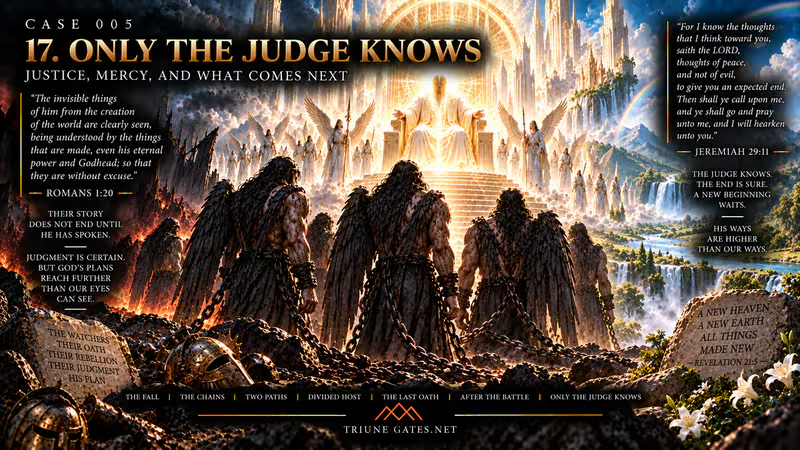
What happens next?
We do not know.
Perhaps the Watchers never leave their prison except to receive their sentence.
That remains the straightforward reading of the ancient judgment traditions.
Perhaps there is no final division among them.
Perhaps there is no Watcher-against-Watcher battle.
Those things belong entirely to our What If?
But look at the pieces that brought us here:
Genesis 6:1–4
Heavenly beings cross a forbidden boundary.
1 Enoch 6:3–6
Two hundred Watchers bind themselves by an oath upon Mount Hermon.
1 Enoch 10:4–14
Azazel and the Watchers are bound while awaiting final judgment.
1 Enoch 13:3–10
The terrified Watchers ask Enoch to petition God for forgiveness.
Jubilees 5:6–10
The Watchers are bound beneath the earth until the great day of judgment.
2 Enoch 18
Grigori connected with the Watcher tradition mourn their brethren and, after Enoch's rebuke, resume their service before God.
Book of Giants — 4Q203; 4Q530–531
The giant world becomes aware of coming judgment; dreams are taken to Enoch for interpretation, and the surviving material contains appeals associated with prayer and mercy.
Jude 6
Angels who abandoned their proper dwelling are kept in darkness and bonds for the judgment of the Great Day.
2 Peter 2:4
Angels who sinned are held in gloomy darkness until judgment.
War Scroll — 1QM 1; 13; 17
The final conflict is portrayed against a cosmic background involving Belial and supernatural forces.
Revelation 9:14–15
Bound angels are released at a divinely appointed moment and become active within judgment.
Revelation 12:7–9
Michael and his angels fight against the dragon and his angels.
None of these passages says:
“The repentant Watchers will be released and fight the unrepentant Watchers.”
That is our speculation.
But the individual pieces are real.
Bound angels.
A Great Day.
Watchers asking for forgiveness.
Traditions of Watchers mourning and returning to service.
Giants praying in the shadow of judgment.
A cosmic final war.
And supernatural beings who can be bound until God's appointed moment...
and then released.
Put those pieces upon the table.
Do not force them together.
Just look at them.
And ask one question.
WHAT IF?
What if the beings who once made one of the darkest oaths in ancient tradition must eventually face one final choice?
What if thousands of years in darkness have not affected every Watcher in the same way?
What if some still stand by the oath of Hermon...
while others finally understand why God condemned it?
What if the chains open?
What if Semyaza calls his brothers one final time?
And what if...
this time...
not everyone follows?
Then perhaps the first great Watcher rebellion would end in the most unexpected way imaginable:
not merely with the destruction of the rebels—
but with the destruction of the oath itself.
And if an ancient rebel finally stands before God after choosing obedience...
knowing full well that he still deserves judgment...
what does the Judge say?
We cannot answer that.
Perhaps that answer was never ours to give.
Only the Judge knows.
After the Last Oath
A moment for reflection
The following music was not written for this story. Yet its atmosphere resonates with some of the questions explored in Case 005 — The Last Oath.
The fall. The consequences of a choice. The passing of time. Regret. And the question of whether a heart can change, even after judgment has been pronounced.
The ancient texts do not give us every answer.
And perhaps that is where this Case should end.
Only the Judge knows.
Listen, reflect, and draw your own conclusions.
Sources behind this Case
Bible: Genesis 6:1–4; Jude 6; 2 Peter 2:4; Revelation 9:13–15; Revelation 12:7–9.
Ancient Jewish / Enochic literature: 1 Enoch 6–16, especially 6:3–6; 10:4–14; 13:3–10. Jubilees 5:1–11. 2 Enoch 18. Book of Giants, especially fragments 4Q203 and 4Q530–531. War Scroll (1QM), especially columns 1, 13 and 17.
Important distinction: Genesis, Jude, 2 Peter and Revelation belong to the biblical source layer used in this Case. 1 Enoch, Jubilees, 2 Enoch, the Book of Giants and the War Scroll are ancient extra-biblical witnesses used to investigate how Jewish and Enochic traditions developed these themes.
The theory that repentant and unrepentant Watchers will be released to fight in the final battle is not stated in any of these sources. The "What if" scenario explored in this Case is a deliberate speculation authored by Richard Oskam.
Explore the full story
Return to Journey IV: The Watchers