
The Flood
What appears when texts are placed beside each other? By combining Scripture and ancient Jewish thought, profound answers emerge about the origin of evil spirits, surviving knowledge, and the ultimate prophetic warning.
Why was the Flood sent?
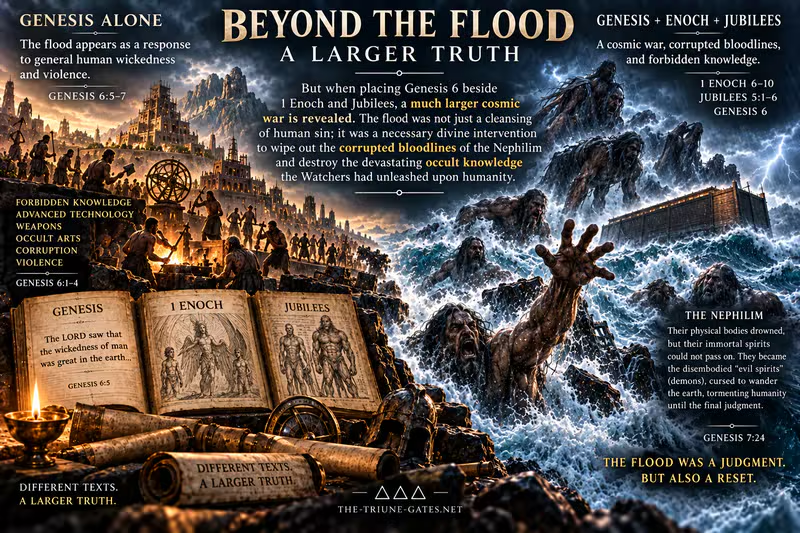
When reading Genesis alone, the flood appears as a response to general human wickedness and violence. But when placing Genesis 6 beside 1 Enoch and Jubilees, a much larger cosmic war is revealed. The flood was not just a cleansing of human sin; it was a necessary divine intervention to wipe out the corrupted bloodlines of the Nephilim and destroy the devastating occult knowledge the Watchers had unleashed upon humanity.
What happened to the giants?
If the Nephilim died in the flood, why did evil not disappear? Ancient texts like Enoch and Jubilees provide a direct answer that formed the foundation of 1st-century Jewish theology: Because the giants were half-angel and half-human, their physical bodies drowned, but their immortal spirits could not pass on. They became the disembodied "evil spirits" (demons) cursed to wander the earth, tormenting humanity until the final judgment.
Did forbidden knowledge survive?
A massive mystery remains: if the pre-flood world was wiped out, how did occult practices, astrology, and dark arts reappear so quickly in ancient Babylon and Egypt? The Book of Jubilees answers this explicitly through the story of Kainam, who found an ancient rock inscription detailing the teachings of the Watchers. The waters destroyed the flesh, but the forbidden knowledge crossed the flood carved in stone.
Why are there giants after the Flood?
Genesis 6:4 states the Nephilim were on the earth in those days, "and also afterward." Later in Scripture, the Israelites encounter giant clans like the Anakim and Og of Bashan. Did the Watchers return? Did corrupted genetics survive through Noah's descendants? This lingering mystery sets the stage for the next phase of biblical history: the conquest of Canaan.
The Lawless One
Could Paul's end-time language intentionally echo ancient themes of rebellion and lawlessness?
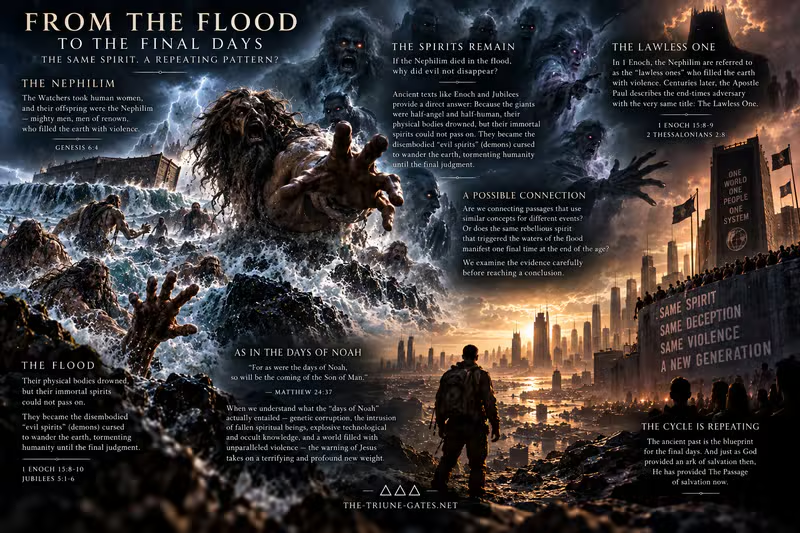
In 1 Enoch, the Nephilim—the giant offspring of the fallen Watchers—are specifically referred to as the "lawless ones" who filled the earth with violence. Centuries later, the Apostle Paul describes the ultimate end-times adversary (the Antichrist) with the very same title: The Lawless One (2 Thessalonians 2:8).
Are we connecting passages that use similar concepts for different events? Or does the same rebellious spirit that triggered the waters of the flood manifest one final time at the end of the age? We examine the evidence carefully before reaching a conclusion.
As in the Days of Noah
"For as were the days of Noah, so will be the coming of the Son of Man."
Matthew 24:37This brings us to the ultimate connection. Jesus Christ did not just use the flood as an example of people being caught off guard. He pointed to a specific era.
When we understand what the "days of Noah" actually entailed—genetic corruption, the intrusion of fallen spiritual beings, explosive technological and occult knowledge, and a world filled with unparalleled violence—the warning of Jesus takes on a terrifying and profound new weight.
The ancient past is the blueprint for the final days. The cycle is repeating. And just as God provided an ark of salvation then, He has provided The Passage of salvation now.